why us
We would rather point than claim. Everything below is something you can open and check for yourself. None of it asks for your trust in advance.
Start with the most recent. We put an agent where the customers already are, a WhatsApp assistant that runs the studio’s own front desk: one business number serving both a prospect and the founders, answering questions, holding a booking conversation, and writing to their real calendar behind code rather than prompt hope. The moment a booking lands, the founders’ screen fills with a brief, a tappable calendar link, and a ready welcome draft, and the page carries a synced two-screen demo of exactly that. The same discipline runs on a harder transport in a voice agent that answers the studio’s calls, live from a phone in Muscat: it listens, offers a real slot, reads it back, and books it, with a recorded demo on the page too. And it began with a text agent that runs a CEO’s calendar: it books, reschedules, and holds a line on what it is allowed to write, every consequential action gated in code rather than asked of the model. Watch them and you have watched the argument: we build agents that move, not agents that talk.
Two more we have opened all the way. cc-dm is a Claude Code plugin we open-sourced and Anthropic reviewed, the plumbing under our own work, given away. And a case study on running the lab’s own workflow on this very website turns the pipeline we would run for a client onto ourselves, including the moment forty-two agents reached for the wrong call and a human caught it. We publish the judgment, not only the wins. That is the part you are actually hiring.
We are not a single-vendor shop. We build on the best model for each capability and standardize on one toolchain underneath, so the work stays portable and you are never told “we cannot do that” because one lab has a gap. Claude is our default for reasoning and for building, because there it is genuinely frontier. The voice agent above runs on a different lab’s realtime model, chosen because it was the right tool for that job. You own what we hand you, and you are not locked to anyone’s platform.
The frontier moves weekly, and we read it the day it ships. Our notes are the record of that reading. They also state the problem we exist to close: the capability overhang, the distance between what AI can already do and what most businesses actually use, which widens on its own and only embedding closes. Reading the frontier the day it ships is the difference between recommending a tool and understanding one.
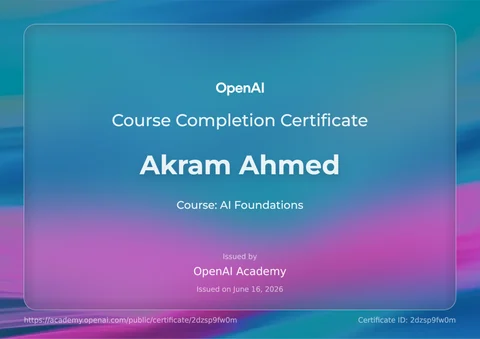
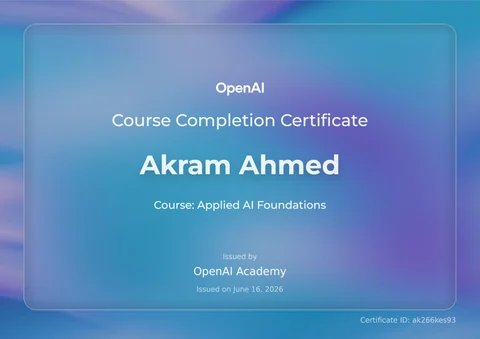
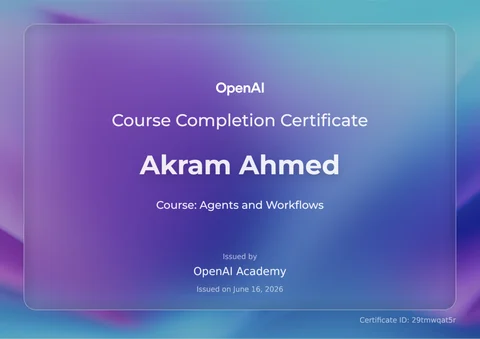
The certificates below corroborate all of it. We hold the Anthropic Academy catalog in full, every course it publishes: the build path from Claude and the API through subagents, skills, and the Model Context Protocol; the deployments onto Amazon Bedrock and Google Cloud’s Vertex AI; and the fluency track end to end, up to teaching the framework itself. Alongside it we hold the OpenAI Academy track, from its foundations to its agents-and-workflows course, because building on the best model for each job means reading more than one lab. But a certificate is a receipt, not the work. It says we studied the material. The artifacts above show what we did with it.
Certificates
Anthropic Academy
-
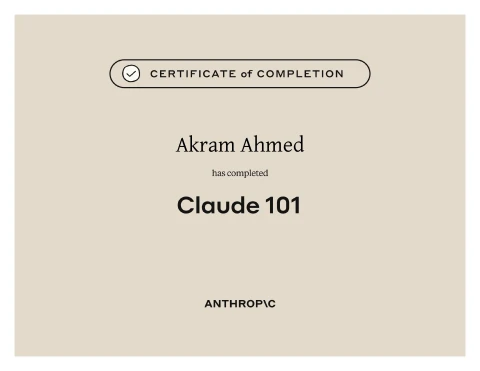 Claude 101
 -
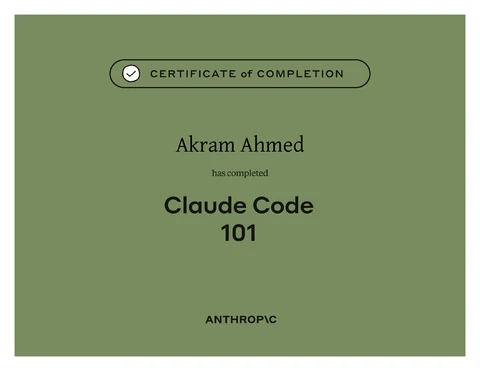
Claude Code 101 -
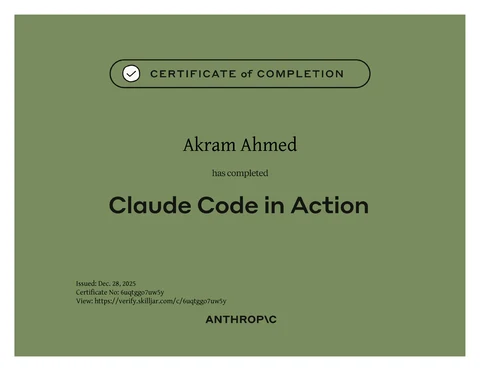 Claude Code in Action
 -
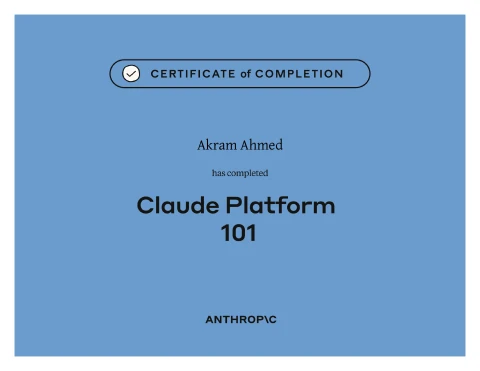 Claude Platform 101
 -
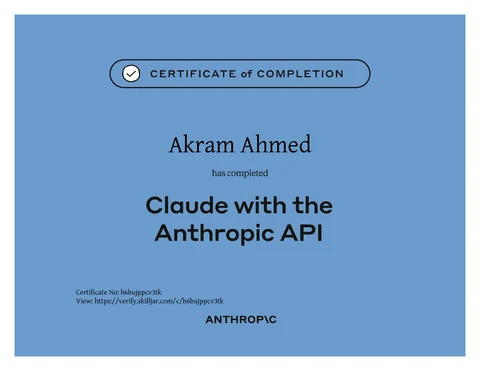 Claude with the Anthropic API
 -
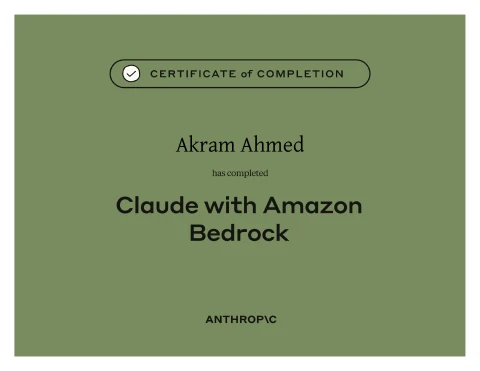 Claude with Amazon Bedrock
 -
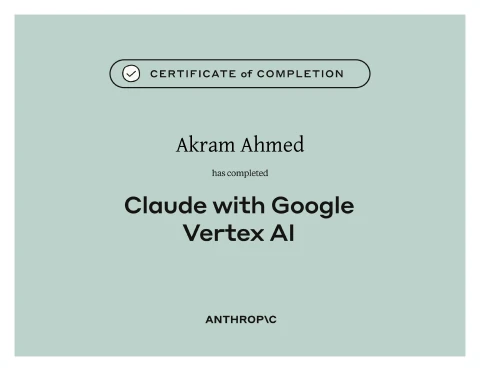 Claude with Google Cloud's Vertex AI
 -
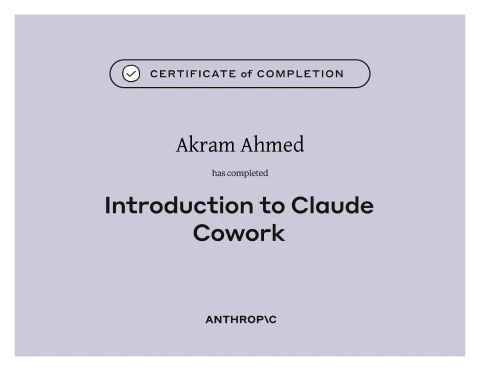 Introduction to Claude Cowork
 -
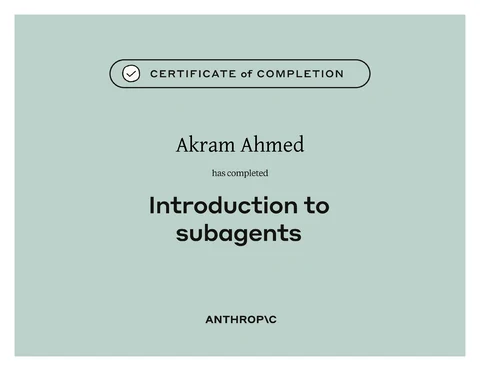
Introduction to subagents -
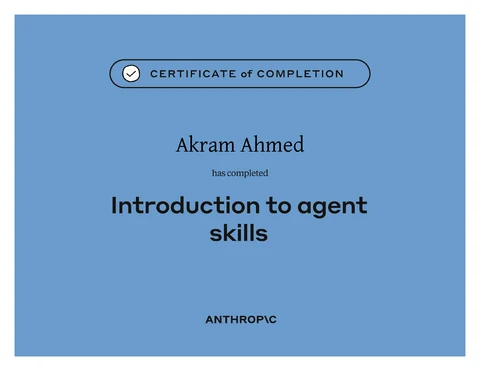
Introduction to agent skills -
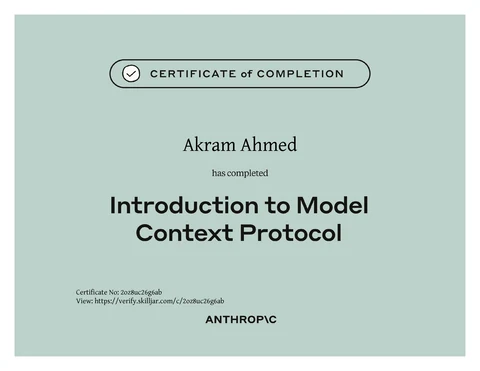 Introduction to Model Context Protocol
 -
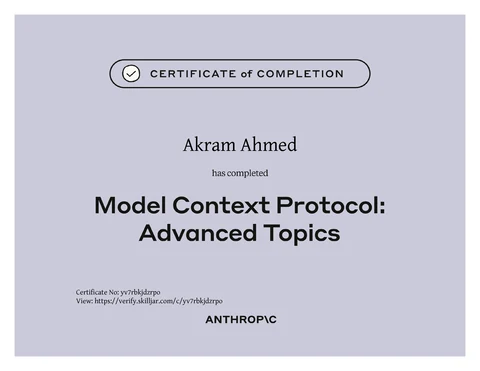 Model Context Protocol: Advanced Topics
 -
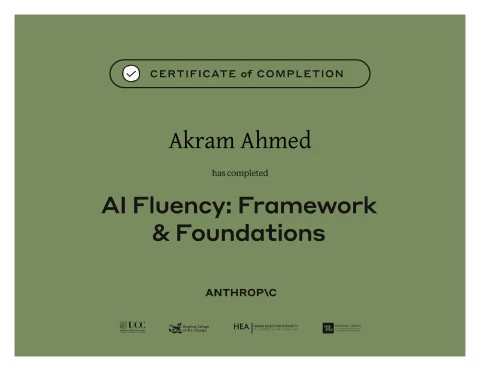 AI Fluency: Framework & Foundations
 -
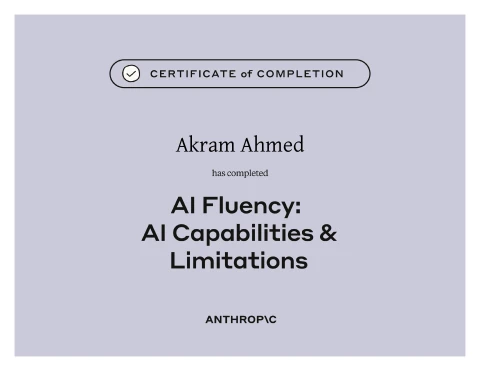 AI Capabilities and Limitations
 -
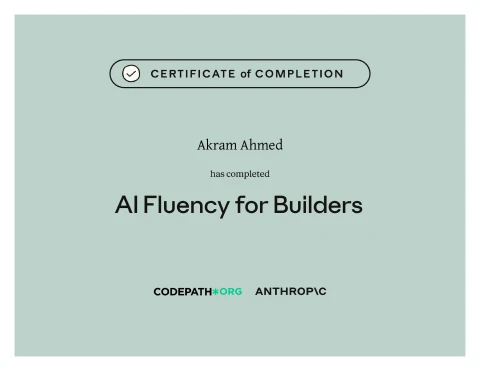 AI Fluency for Builders
 -
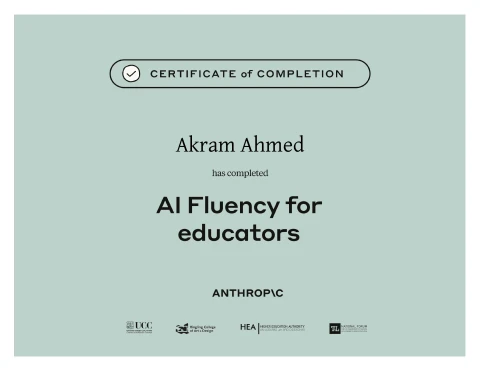 AI Fluency for educators
 -
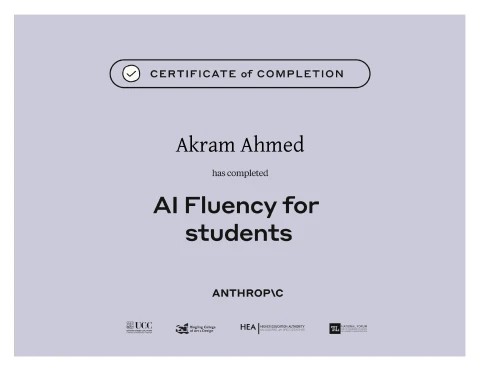 AI Fluency for students
 -
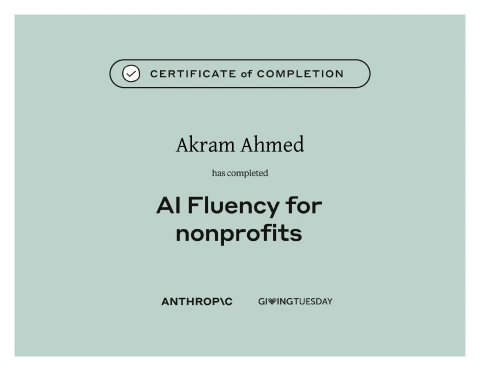 AI Fluency for nonprofits
 -
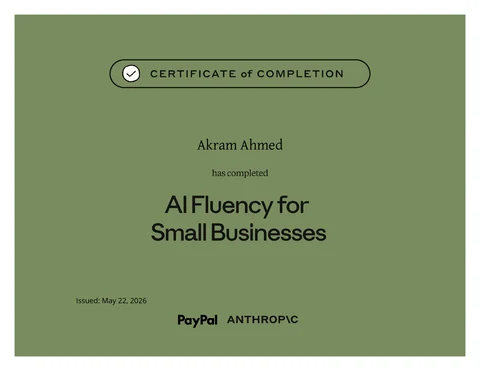
AI Fluency for Small Businesses -
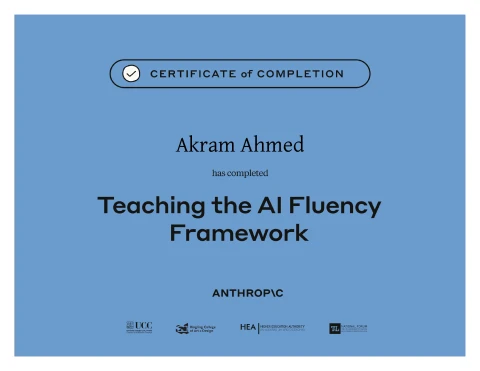 Teaching AI Fluency
OpenAI Academy